Inspiration
Wedding invitation paper: how to choose weight, surface and colour
Choosing paper is one of the most important steps when creating your wedding invitation. Paper determines the first impression, tactile experience, and overall character of your stationery.
Choosing paper is one of the most important steps when creating your wedding invitation. Paper is not just a carrier for text; it determines the first impression, the tactile experience, and the overall character of your stationery. A smooth graphic paper feels entirely different from handmade paper with visible fibres.
In this article, we will walk you through how to choose the right paper for your wedding invitation (by weight, surface, and colour) with practical examples along the way.
Why paper matters so much for wedding invitations
Paper is the first thing your guests touch. Before they even read the names or the date, they notice:
- the weight in their hand
- the surface and texture
- the colour and tone
This is exactly why special papers are used for wedding invitations; ordinary office paper simply does not belong here.
Paper weight: how many grams is ideal?
300gsm paper: the gold standard for wedding invitations
If you are looking for a versatile and proven choice, 300gsm paper is the ideal foundation.
Advantages:
- sturdy and substantial
- does not curl or warp
- feels luxurious from the first touch
- suitable for printing, embossing, and die-cutting
The most commonly used option is graphic paper at 300 g/m², which is strong enough without additional layering.
Higher weights (350: 600gsm)
These are typically used for:
- minimalist invitations without envelopes
- standalone cards
- layered suites
Higher weight adds a sense of "object-ness", but also limits printing and folding options.
Paper surface: smooth, textured, or handmade?
Graphic paper (smooth or subtly textured)
Graphic paper is the most common choice for modern wedding invitations.
It works well when:
- you want a clean, elegant look
- you are working with typography
- you are combining multiple paper layers
It comes in matte, velvety, and lightly textured finishes.
Pearlescent paper: subtle shimmer for a festive effect
Pearlescent paper has a delicate sparkle and beautifully reflects light.
It is used:
- for more formal invitations
- for details, inserts, or place cards
- in combination with minimalist printing
Note: heavy printing or overly decorative fonts can look overwhelming on pearlescent paper.
Recycled paper: natural and authentic
Recycled paper is popular with couples seeking a more sustainable option.
Characteristics:
- slightly warm tone
- small visible inclusions
- natural, unpolished appearance
It pairs beautifully with:
- delicate typography
- minimalist layouts
- earthy colours
Handmade paper: every piece is unique
Handmade paper is the most artisanal option.
Typical features:
- irregular edges
- visible fibres
- variations between individual sheets
It is typically used:
- for smaller print runs
- for luxury or deeply personal invitations
- as a top card or accent detail
Handmade paper is not about perfection; it is about emotion and uniqueness.
Paper colour: why white is not just white
The colour of your paper significantly affects the overall impression and text legibility.
Most common shades:
- warm white / ivory: the most versatile
- cream: soft, romantic
- light natural tones: ideal for recycled papers
- pastel colours: for modern and playful invitations
Pure snow-white paper is rarely used for wedding invitations; it often feels too harsh.
How to combine papers in one suite
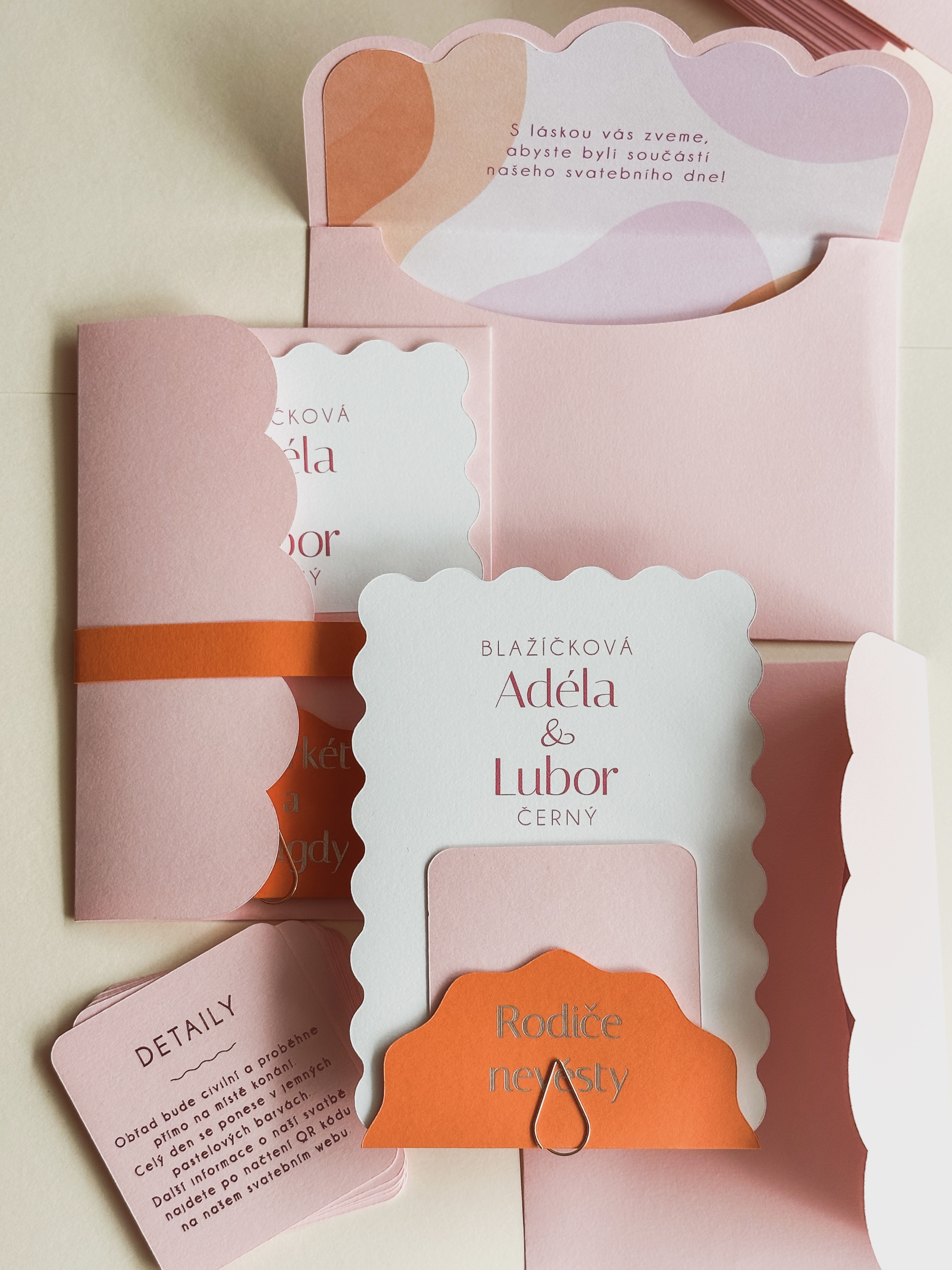
Layering papers is a popular approach:
- main card in 300gsm graphic paper
- accent card in recycled or pearlescent paper
- envelope in a contrasting yet harmonising material
This kind of invitation feels like a small object, not just a printed piece.
Summary: how to choose paper for your wedding invitation
When selecting paper, ask yourself:
- What feeling should the invitation evoke?
- Should it feel more modern or more artisanal?
- Will it be simple or layered?
Most common combinations:
- 300gsm graphic paper as the base
- specialty papers as accents
- colour leaning warm rather than cool
The right paper can say more about your wedding than any amount of text.